
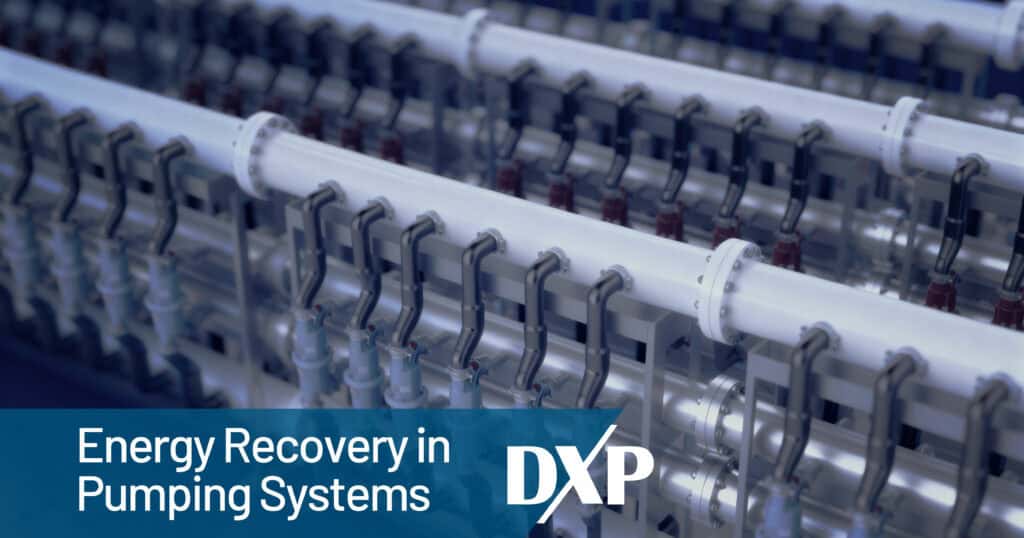
Pumping systems are essential to moving fluids across municipal, industrial and commercial operations. Yet many of these systems waste a significant amount of energy—especially in applications involving high pressure differences, long-distance transport or continuous operation. Rather than allowing excess pressure or flow energy to dissipate as heat, more facilities are adopting energy recovery devices (ERDs) to capture and reuse that energy.
By recovering energy that would otherwise be lost, facilities can lower operating costs, improve system efficiency and reduce the environmental impact of their pumping processes.
Where Energy Loss Occurs in Pump Systems
Energy losses in pump systems commonly occur in areas where pressure is reduced or throttled. Examples include:
- Reverse osmosis water treatment
- Desalination facilities
- High-pressure industrial washing systems
- District heating and cooling pipelines
- Mining and mineral processing
- Wastewater treatment systems
In these situations, excess pressure is often released through control valves or orifice plates. While these methods regulate flow, they also discard usable energy. Energy recovery devices are designed to intercept this energy before it is lost.
Types of Energy Recovery Devices
Two of the most widely used ERDs in pump systems are turbine-based devices and pressure exchangers.
Turbine-Based Energy Recovery
A turbine is added to the system to harness excess pressure and convert it into mechanical or electrical energy. This recovered energy can be:
- Returned to the pump drive shaft
- Routed to another piece of rotating equipment
- Converted into electricity for on-site use
Turbine recovery works well in systems with steady flow and continuous high-pressure drops.
Pressure Exchangers
Pressure exchangers transfer energy directly from a high-pressure fluid stream to a low-pressure stream, with minimal losses. This is especially efficient in reverse osmosis desalination, where pressure exchangers can:
- Reduce high-pressure pump load
- Improve overall energy efficiency by up to 60%
- Lower total system power consumption
Pressure exchangers are ideal for applications where both streams are compatible and flows are relatively consistent.
Benefits of Integrating Energy Recovery Devices
Implementing energy recovery devices can provide substantial advantages:
- Reduced Operating Costs: Lower energy consumption directly reduces utility expenses.
- Smaller Pump and Motor Requirements: With part of the load offset by recovered energy, pump sizing may be more efficient.
- Improved Sustainability Metrics: Reduced power draw helps facilities meet environmental and ESG goals.
- Extended Equipment Life: Reduced system pressure and lower pump load decrease mechanical stress and maintenance requirements.
Over time, the cost of adding energy recovery technology is often offset by long-term operational savings.
How DXP Pacific Supports Energy Recovery Integration
Implementing energy recovery solutions requires in-depth system analysis. DXP Pacific works with operators to:
- Evaluate where energy losses are occurring
- Determine the most effective energy recovery device for the system
- Ensure compatibility with existing pumps and controls
- Optimize flow paths and pressure balancing
- Commission and support system integration
Our engineering team ensures that energy recovery solutions deliver measurable performance improvements aligned with your operational goals.
A Smarter Path Forward
As energy costs rise and sustainability targets tighten, energy recovery in pump systems provides a proven strategy for improving efficiency and lowering lifecycle operating expenses. Whether designing a new system or optimizing existing infrastructure, capturing lost energy is one of the most impactful ways to enhance performance.
DXP Pacific is here to help you bring energy recovery opportunities to the surface—and turn wasted energy into value. Contact us today to learn more about how we can help you improve your energy recovery.